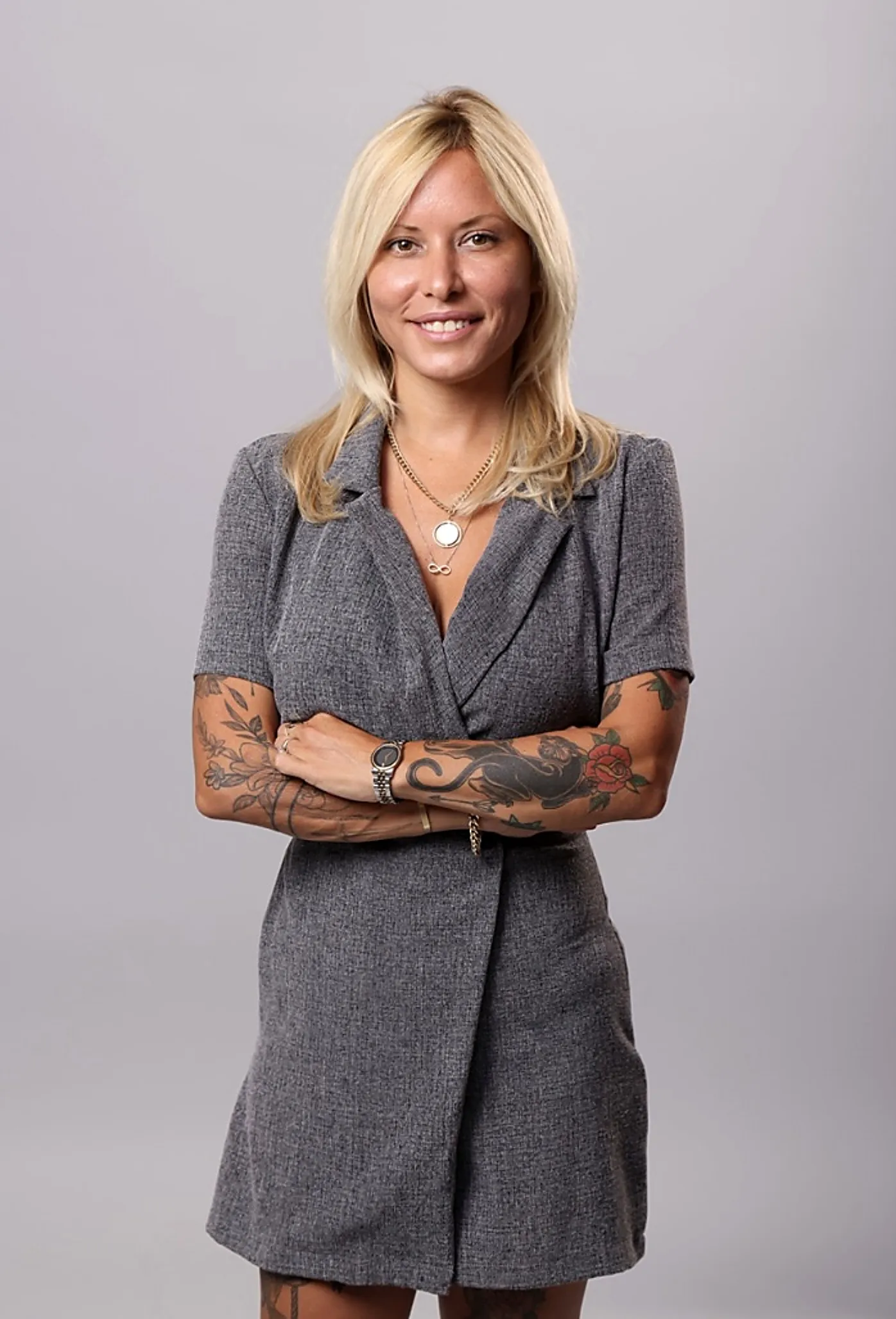
Shirly Moas

“We were never meant to be
just one version of ourselves.”

Shirly Moas

Therapist · Researcher · Lecturer

“Your best self isn’t one version of you. It’s the freedom to move between all the versions you are.”

Shirly Moas
GaslightingA term for manipulation that leads a person to doubt their own memory, perception or understanding of what happened. An argument, a memory error or a different interpretation is not gaslighting in itself. What matters is whether there is a repeated pattern of distortion and denial.Anxious-avoidant cycleA cycle in which one partner steps up approaches, criticism or demands for a response in order to get closer, and the other withdraws to lower the tension. The more pressing the approach, the stronger the withdrawal, and vice versa. These are roles within a cycle, not traits of people. They appear across genders and in every kind of couple, and the one who pursues is usually the one who wants more change.TraumaThe impact of a difficult or threatening event that continues after the event has ended. It can affect a person's sense of safety, the body and relationships with others. Not everyone who has been through a traumatic event develops PTSD.Love bombingA popular expression, not a diagnosis, for a rapid flood of attention, compliments and declarations about a shared future early in a relationship. Sometimes it is sincere enthusiasm, and sometimes it is part of a pattern that rushes the relationship or sways the other person's choices. The difference becomes clear later, not in a single moment.Differentiation of selfThe ability to be close while holding on to your own thoughts, wishes and boundaries. It is not detachment or total independence, but the possibility of being in a relationship without erasing yourself.Open relationshipA form of consensual non-monogamy in which partners allow connections outside the relationship on terms they set together. Some couples allow only sexual connections, others emotional ones too. There is no single model.ResilienceThe ability to cope with hardship, adapt and return to functioning. Resilience is not the absence of pain, and it can grow stronger over a lifetime.
Shirly Moas
Who I am

Nice to meet you, I'm Shirly.

I have always been curious about how wide we are, and how narrow the place most of us get used to living in. How can we understand so well what hurts us, and still return to the same places? And why is it that what once helped us cope is sometimes what makes things hard today?

I was born in Brazil, adopted and raised in Israel. I am married and a mother of three. Several versions of myself live in me together, and none of them alone tells the whole story.

I bring this way of seeing to the clinic, to research, to lectures and to education, alongside more than twenty years of service in the IDF casualty system. Over the years one question has stayed with me: what allows us to see ourselves differently, even when it seems we already know who we are. Out of this curiosity grew my research, which examines how the ability to move between different ways of seeing ourselves relates to coping with trauma.

In the clinic I accompany individuals, couples and people in relationships, teenagers and their parents, around questions of relationships, identity and sexuality, parenting, and coping with crisis and trauma. It is not always easy to say what exactly is hard, and sometimes even when we understand, we do not know how to change. We can start from there too.

“Change does not necessarily begin when we become someone else, but when we discover that the way we are used to seeing ourselves is not the only possibility.”

Shirly Moas

Education and professional training

Academic

  • Doctoral studies Ph.D.Bar-Ilan UniversityResearch in trauma, self-representation and cognitive flexibility
  • MA in Educational Counseling M.A.Bar-Ilan University
  • BA in Social Sciences B.A.Bar-Ilan University · with honors

Licensing and certificates

  • Educational counseling licenseMinistry of Education
  • Teaching certificateBar-Ilan University

Clinical training

  • Couples and family therapyBarkai InstituteCompletion of the theoretical training track in accordance with the criteria of the Israeli Association for Couple and Family Therapy
  • Cognitive behavioral therapy CBT low intensityLevinsky College
  • Sexuality and diverse relationshipsCenter for Alternative SexualityTherapist training for work with non-monogamous relationships, BDSM, fetish and identities across the trans spectrum
Ideas
01Identity is movementWe are many on the inside; health is access to more of our versions.
02Trauma as movementEven when it seems everything has stopped, something inside keeps moving.
03Love off the normNon-monogamy and alternative sexualities are often an honest attempt to find the version that fits.
All the ideas

Let us begin with a conversation.

A few words about what brings you are enough.
From there, we will set up a first meeting together.

This channel is for scheduling only, so there is no need to share sensitive personal details. In an emergency in Israel: ERAN 1201 or MDA 101.

Privacy policy

Draft for a lawyer's review before launch.

What is collected

Only what you choose to send: a name and a way to reach you, and an email address if you subscribe to the letter.

What it is used for

To reply to you, and to send the letter if you asked for it. Nothing is sold or passed on for marketing.

Where it is kept

Inquiries reach Shirly's mailbox. Subscriptions are kept with the service that sends the letter. The services will be named here before launch.

Your rights

You can ask to see, correct or delete your details at any time: contact@shirlymoas.com.

Cookies

The site does not use tracking or measurement cookies. If that changes, you will be asked for consent first.

Accessibility statement

Draft. Compliance is confirmed only after an accessibility check before launch.

The site is built to be accessible to people with disabilities, following Israeli standard IS 5568 and WCAG 2.1 at level AA.

What was done

  • Full keyboard navigation with a visible focus state and a skip to content link
  • Sufficient contrast and readable text
  • Text descriptions for images
  • Labelled form fields
  • Marked headings and page regions for screen reader navigation
  • Reduced motion for visitors who ask for it

Accessibility menu

An accessibility button sits in the bottom corner of the screen. It lets you enlarge text in two steps, switch on high contrast, highlight links, stop animations and switch to a readable font. Settings are saved in your browser for your next visit, and the reset button restores the default view.

Testing

The site was tested with the automated axe-core checker on every page, at desktop and mobile widths, and fixed according to the findings. Automated testing does not replace a full manual review, so compliance will be confirmed in the accessibility check before launch.

Found a problem?

Accessibility coordinator: Shirly Moas, contact@shirlymoas.com. Last updated: [launch date].

Terms of use

Draft for a lawyer's review before launch.

Not a substitute for care

The content here is general. It is not therapy, diagnosis or professional advice for any specific person. In an emergency, contact emergency services.

Content

The texts, ideas and images belong to Shirly Moas. Quoting with credit and a link is welcome; other uses need permission.

Contact through the site

Sending a form does not create a therapeutic relationship.